The Agritech Revolution Transforming Nigerian Agriculture

Emmanuel Nwosu
Verified ExpertBusiness Editor | Agricultural Economics
From drone-powered crop monitoring to AI-driven market predictions, Nigerian agritech startups are revolutionizing the country's agricultural sector, attracting $500 million in investment and empowering millions of smallholder farmers.
The Digital Farm
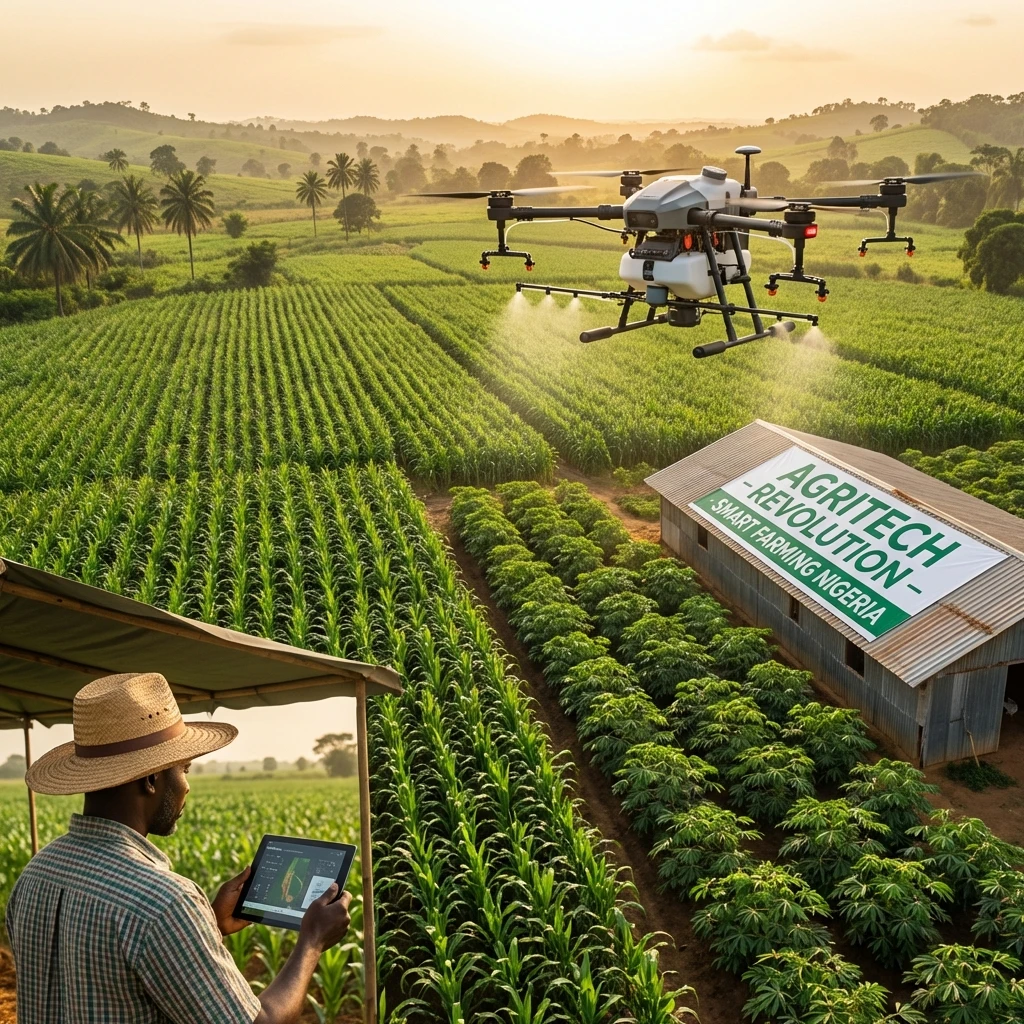
In a rice paddy outside Kano, farmer Abdullahi Mohammed operates what might be Nigeria's most technologically advanced small farm. Drones monitor crop health, IoT sensors track soil moisture, and a smartphone app connects him directly to buyers in Lagos and Abuja.
"Five years ago, I was losing 40% of my harvest to pests and poor storage," Mohammed explains. "Now I know exactly when to plant, when to water, and who will buy my rice before I even harvest. My income has tripled."
Mohammed is one of over 500,000 Nigerian farmers now using agritech platforms. The sector has grown from virtually nothing in 2015 to a $2 billion industry in 2026, with startups addressing every stage of the agricultural value chain.
Key Players and Innovations
Farmcrowdy leads in crowdfunding agriculture, allowing urban Nigerians to invest in farms and share profits. With over 100,000 farmers on its platform and N10 billion in facilitated investments, it has become a model for agricultural finance.
Thrive Agric provides input financing and insurance to smallholder farmers. Their AI-powered risk assessment has reduced loan defaults to under 5%, making agricultural lending viable for banks.
Hello Tractor operates an Uber-like platform for farm machinery, connecting tractor owners with farmers who need equipment. This has increased mechanization rates and reduced post-harvest losses.
Releaf builds small-scale food processing technology, helping farmers process crops like palm oil and cassava locally, capturing more value before export.
Technology in Action
The technologies being deployed are sophisticated:
- Satellite Imagery: Monitoring crop health and predicting yields across millions of hectares
- Blockchain: Ensuring transparency in supply chains and enabling access to international markets
- Mobile Payments: Facilitating instant payments to farmers, previously dependent on middlemen
- Cold Chain Logistics: IoT-enabled storage and transport reducing post-harvest losses
- Weather AI: Hyperlocal weather predictions helping farmers optimize planting schedules
Economic Impact
The agritech revolution is addressing Nigeria's food security challenges while creating economic opportunity. Agriculture employs 35% of Nigeria's workforce but contributes only 23% of GDP, indicating massive inefficiency.
"Agritech is unlocking trapped value," said Dr. Akinwumi Adesina, President of the African Development Bank. "Every percentage point of efficiency gained in agriculture translates to billions of dollars and millions of jobs."
Export earnings from agricultural products have increased 150% since 2020, driven by improved quality and traceability that meets international standards.
Challenges and Future Outlook
Despite the progress, challenges remain. Rural internet connectivity is still poor in many areas, and many older farmers are resistant to technology adoption. Climate change is also increasing volatility in agricultural output.
However, with the African Continental Free Trade Area (AfCFTA) creating new market opportunities and continued investment flowing into the sector, Nigerian agritech is poised for continued growth. The government's recent launch of a N50 billion Agritech Development Fund signals official recognition of the sector's importance.