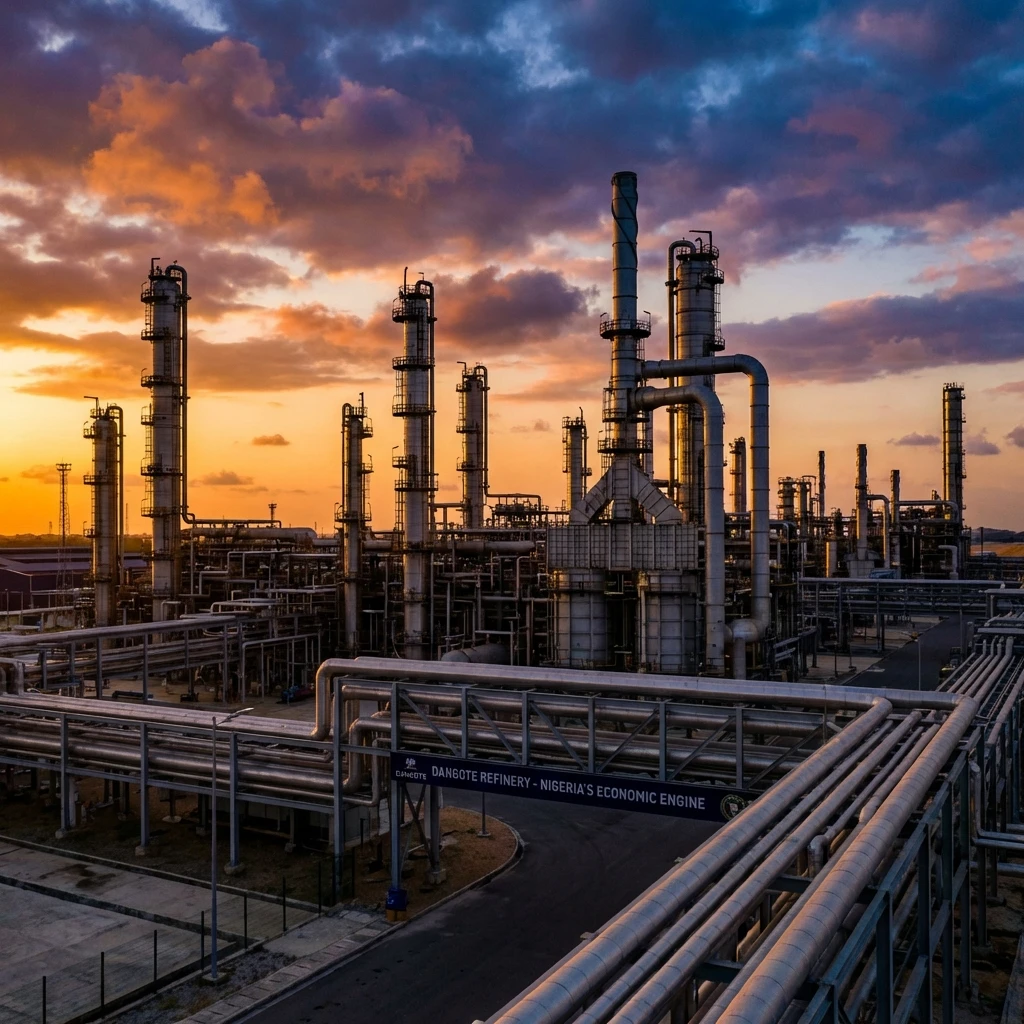
Dangote Refinery at Full Capacity: Transforming Nigeria's Oil Sector

Emmanuel Nwosu
Verified ExpertBusiness Editor | MBA, Energy Analyst
The Dangote Petroleum Refinery and Petrochemicals has reached full operational capacity, marking a historic milestone that promises to revolutionize Nigeria's oil and gas sector and reshape the country's economic landscape.
A Game-Changer for Nigeria
With a processing capacity of 650,000 barrels per day, the Dangote Refinery is now the largest single-train refinery in the world. Located in the Lekki Free Trade Zone, the $20 billion facility can meet 100% of Nigeria's domestic demand for refined petroleum products while exporting surplus to regional and international markets.
For decades, Nigeria - Africa's largest crude oil producer - has been paradoxically dependent on imported refined products. The country's four state-owned refineries operated at less than 10% capacity, forcing the nation to spend over $10 billion annually on fuel imports. That era has now ended.
"This refinery is not just a business venture. It is a strategic national asset that secures Nigeria's energy independence and creates thousands of jobs for our people."
Economic Impact
The refinery's full operation is expected to save Nigeria over $15 billion annually in foreign exchange previously spent on fuel imports. This represents a significant boost to the country's balance of payments and will help stabilize the naira.
The facility has already created over 30,000 direct jobs and an estimated 100,000 indirect jobs across the value chain. From truck drivers to petrochemical engineers, the refinery is reshaping employment in Lagos and beyond.
"The multiplier effect is enormous," said Dr. Muda Yusuf, CEO of the Centre for the Promotion of Private Enterprise. "Every sector of the economy benefits - from logistics to manufacturing to services. This is the kind of transformational investment Nigeria needs."
Product Range and Quality
The refinery produces a comprehensive range of petroleum products including:
- Premium Motor Spirit (PMS/Petrol) - Euro V standard
- Automotive Gas Oil (Diesel) - Ultra-low sulfur
- Aviation Turbine Kerosene (Jet A-1)
- Liquefied Petroleum Gas (LPG)
- Polypropylene and other petrochemicals
The products meet international standards, enabling Nigeria to compete in global markets. The refinery has already secured export contracts with buyers in Europe, South America, and across Africa.
Domestic Fuel Supply
Perhaps the most immediate impact for ordinary Nigerians is the assurance of stable fuel supply. The refinery can produce enough petrol to meet Nigeria's daily consumption of 45-50 million liters, with surplus for strategic reserves.
Fuel queues, a perennial feature of Nigerian life, could become a thing of the past. The Nigerian National Petroleum Company Limited (NNPCL) has signed a 20-year offtake agreement with Dangote Refinery, ensuring consistent supply to the domestic market.
Petrochemical Complex
Beyond fuels, the integrated petrochemical complex produces 3 million tonnes of polypropylene annually. This raw material is essential for plastics manufacturing, creating opportunities for Nigeria to develop its downstream manufacturing sector.
"We can now produce plastics, fertilizers, and other petrochemical products that we previously imported," said the Minister of Industry, Trade and Investment. "This is import substitution on a massive scale."
Challenges and Concerns
Despite the optimism, challenges remain. Environmental groups have raised concerns about emissions and the refinery's impact on the Lekki coastal ecosystem. Dangote Group has committed to implementing world-class environmental management systems and has installed carbon capture technology.
There are also questions about pricing. While the refinery eliminates import costs, global crude oil prices and exchange rates will continue to influence domestic fuel prices. The government has indicated that it will maintain the current pricing framework while ensuring the refinery's viability.
The Road Ahead
With the refinery at full capacity, attention is turning to Phase 2 expansion plans, which include a 1 million tonne per annum fertilizer plant and additional petrochemical facilities. The Dangote Group is also exploring partnerships for a potential LNG export facility.
For Nigeria, the Dangote Refinery represents more than industrial achievement - it is proof that with vision, investment, and determination, Africa's largest economy can process its own resources and capture value across the entire petroleum value chain.